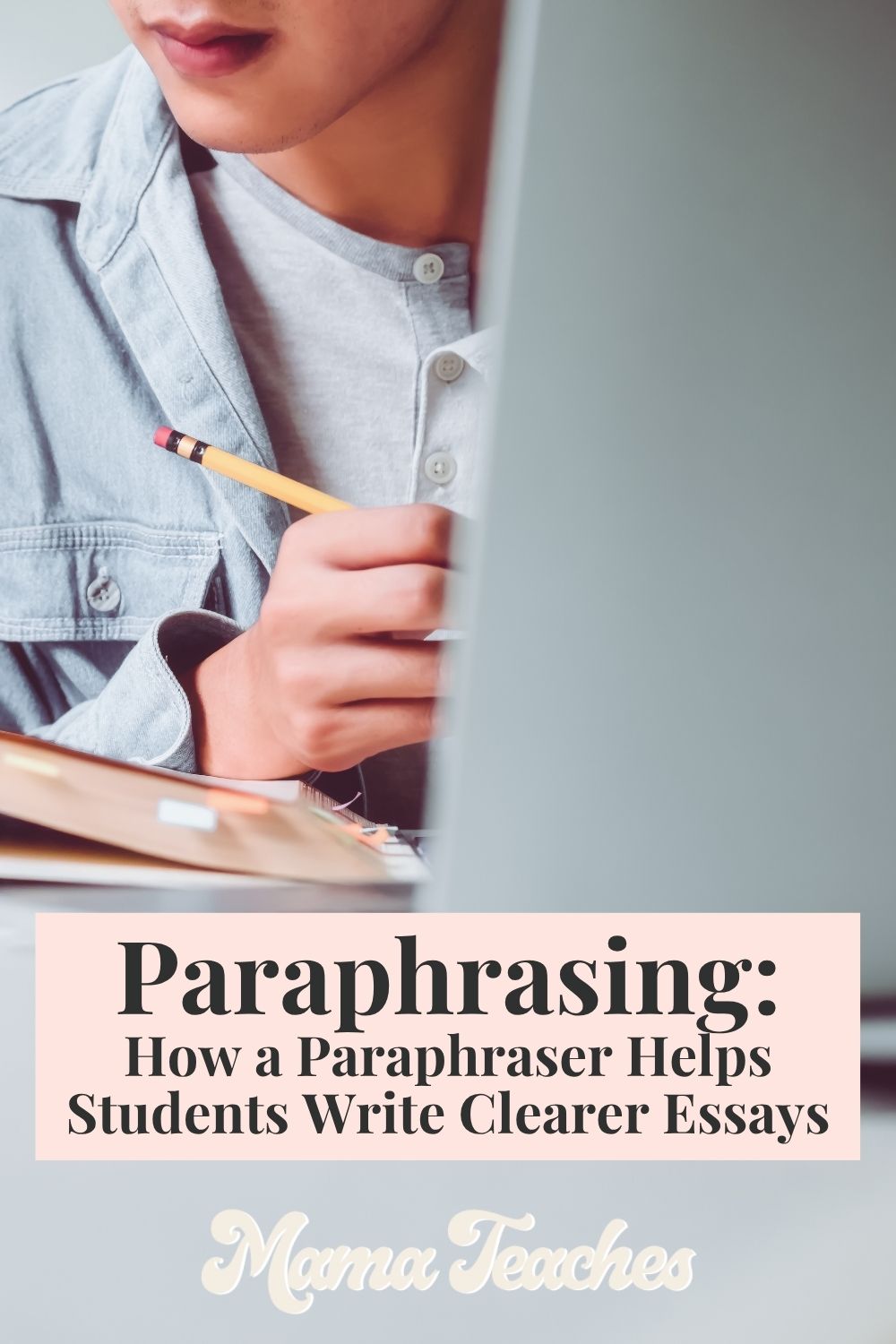
Paraphrasing: How a Paraphraser Helps Students Write Clearer Essays
Most students know they are expected to paraphrase sources, not copy them. What’s less evident is what good paraphrasing actually looks like – and why it’s tougher than it sounds. Simply switching the order of a statement or changing a few words isn’t enough. True paraphrasing is taking an idea and putting it in your own words and sentence structure, but keeping the meaning of the idea the same.

That is a real skill. And for parents, teachers and homeschoolers helping students with writing projects, knowing where it goes wrong is as helpful as knowing what it looks like when it goes right.
What Paraphrasing Actually Is
Paraphrasing is more than just replacing synonyms. That’s one of the most prevalent fallacies students come into essay writing with, and one of the most common reasons their work gets highlighted for resemblance even when they really did try to restate the source.
Real paraphrasing means reading the source, understanding it well enough to put the document away, and writing the idea in your own words. The sentence structure is different. The vocabulary becomes changed. The meaning stays the same. If you refer to the original while you are writing, your output will tend to come out closer to the source than it ought to.
There is also a difference between paraphrasing and summarizing. A paraphrase has about the same amount of material as the original passage. This is summarized. Both are valid, but they have different uses — and confusing the two results in essays that either under-explain or over-quote.
Where Students Go Wrong
There are some predicted occasions at which students struggle with paraphrasing. Knowing where they are makes it easier to avoid them.
The most frequent mistake is to do word-for-word substituting, i.e. to take a sentence from a source and substitute individual words by synonyms, while preserving the same structure. It seems different on the surface, but sticks too closely to the original. Most plagiarism detection software will spot this. More importantly it does not reflect any real comprehension of the content.
Another typical problem is incomplete attribution. Students sometimes quote effectively yet neglect to cite the source, creating an originality problem even if the restatement is good. Just like a direct quote , every paraphrased notion needs a citation .
Third, the use of a single source is problematic. Essays that focus on one or two sources sometimes involve extensive paraphrasing of those sources, which reduces the originality of the work and weakens the argument.
How a Paraphraser Tool Supports the Process
AI paraphrasing tools have become a standard part of many students’ writing workflows. Used well, they’re genuinely helpful. Used carelessly, they reproduce the same problems students are trying to avoid.
The value of a tool is in the starting point it provides – a restructured version of text that the student can then read, compare against the source, and revise further. Students working on essays who want to check whether their restatement is distinct enough often use Getsolved’s tool as an academic paraphraser to get a restructured version they can work from and compare against the original. The output shows a different way to frame the same idea, which is useful when a student is stuck on phrasing or unsure whether their version is close enough to the source to be a problem. Combining that with a manual review of the final draft is the most reliable approach.
The key distinction is using the tool to support understanding, not to replace it. A paraphrase that a student can’t explain in their own words hasn’t helped them learn the material.
A Step-by-Step Approach That Works
Here’s a practical process students can follow for any source they need to paraphrase:
- Read the passage fully – don’t start until you understand what it’s saying
- Close the source – write the idea from memory without looking back
- Compare against the original – check that the meaning is preserved and the phrasing is genuinely different
- Add the citation – every paraphrased idea needs attribution
- Read in context – make sure the paraphrase fits naturally into the surrounding paragraph
That last step matters more than most students realize. A paraphrase that’s technically correct but tonally inconsistent with the rest of the essay sticks out. The goal isn’t just originality – it’s coherence.
Paraphrasing vs. Quoting: When to Use Each
Both paraphrasing and direct quotation have their place. The choice depends on what the writing requires.
| Situation | Best Approach |
| The idea matters more than the exact wording | Paraphrase |
| The exact wording is significant (definitions, legal language, key terms) | Direct quote |
| You need to condense a long passage | Paraphrase or summary |
| The source is an authority whose specific words add weight | Direct quote |
| Multiple sources say the same thing | Paraphrase and combine |
Over-quoting is a common issue in student essays. A piece that’s mostly direct quotes doesn’t demonstrate the student’s own thinking – it demonstrates their ability to find relevant passages. Paraphrasing shows engagement with the material.
Building the Habit Early
Paraphrasing is a skill that snowballs for kids in middle school, high school, and college. “Students who get this early – who learn to express ideas in their own words, instead of relying on quotation or close copying – tend to write with more confidence and clarity in every subject.”
It’s not a complex process. Read, comprehend, shut the source, write. Verify the result. Source: Cited. It is more time consuming than copying, but the outcome is truly the student’s own work – which is the objective of the assignment in the first place.
Parents and instructors can reinforce the behavior with a simple question after any paraphrase: “Can you explain this in your own words without looking at what you wrote?” If the response is yes, the paraphrase is successful. If so, then the learner has worked enough with the source before putting it down.
You May Also Like…