Adapting Math Instruction: Dyscalculia-Friendly Teaching Strategies
When teaching math to students with dyscalculia, it is essential to adapt your approach. Try these strategies!
What Is Dyscalculia?
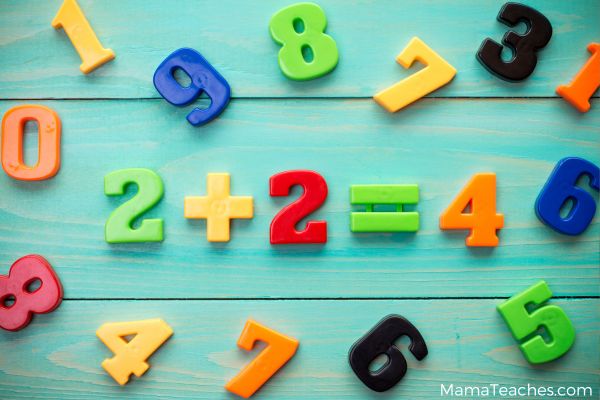
Dyscalculia is a brain-based learning difference that affects a person’s ability to understand numbers and perform basic arithmetic operations.
It is sometimes referred to as “number dyslexia,” but it is a separate learning disability (although they may occur together).
For more on dyscalculia, such as how it manifests in children, teens, and adults, read this article.
Classroom Dyscalculia Help
If you have students with dyscalculia, the first step is diagnosis.
Once the student has that, you can work with the school psychologist and learning specialists to follow the IEP and 504 plan (since some students with dyscalculia may have co-occurring diagnoses).
A classroom teacher has to differentiate instruction for students with dyscalculia in four main ways:
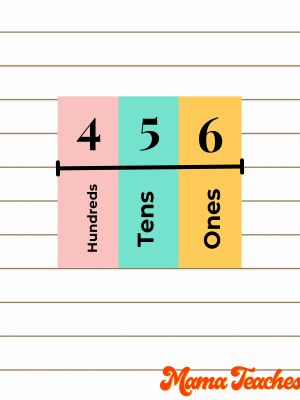
Make Math Visual
Not only should you lean into manipulatives and diagrams, but you should also provide anchor charts and templates.
Reduce Quantity
When a student has dyscalculia, working through a math problem can take a considerable amount of time.
You will need to adjust the assigned quantity of the math problems for these students.
Offer Technology Supports
Students with dyscalculia may benefit from technology supports like calculators, learning apps, and text-to-speech technology (if dyslexia is co-occurring).
Alternative Assessment Options
Consider oral assessments as an alternative to written assessments.
You can also try some of these math project ideas for elementary, middle, and high school students as an alternative to math tests.
For more on helping students with dyscalculia, read this article.
Homeschool Dyscalculia Help
If you have a child with dyscalculia, you may wonder if homeschooling them is the right choice. Can you meet their needs?
The answer is yes!
Homeschooling is advantageous since most children and teens with dyscalculia benefit from one-on-one math instruction.
With the right strategies, students with dyscalculia can progress in math and find success.
Homeschool dyscalculia help is on its way!
Strategies for Teaching: Math Dyscalculia (Homeschool and Classroom)
These easy-to-implement strategies will have an immediate positive effect on your students with dyscalculia.
Choose a Dyscalculia-Friendly Math Curriculum
Not all math programs work well for students with dyscalculia.
If you have the freedom to select a math curriculum, pick one that is highly visual and tactile.
Here are some dyscalculia-friendly programs:
RightStart Math
This program utilizes manipulatives, games, and numerous visual aids for elementary and middle school math.
Math-U-See
The name says it all! This highly visual program emphasizes the use of math manipulatives and lesson videos.
The program starts with basic number sense and runs all the way to calculus.
TouchMath
Specifically designed for students with dyscalculia, TouchMath utilizes hands-on manipulatives in conjunction with interactive lessons and activity sheets to teach mathematics.
Shiller Math
Homeschoolers who follow the Montessori method will enjoy the simple book and math kits from Shiller Math. They emphasize visual and tactile learning.
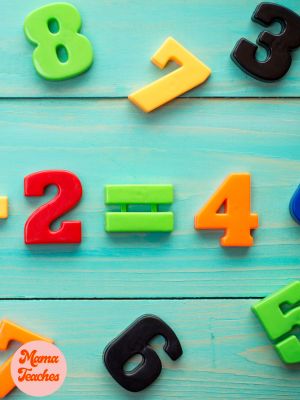
Make Math Multisensory
If you cannot choose a math program that is visual and tactile by design, you can adapt an existing program by using multisensory activities.
Complete math practice on non-traditional surfaces, like tracing numbers in sand, grits, or shaving cream.
Have students walk on a number line taped or drawn on the floor.
Use manipulatives whenever possible, such as counting bears, number discs, base-10 blocks, coins, fraction tiles, and measuring cups.
Picture Word Problems
Students with dyscalculia can struggle with word problems (the translation of language to a math problem).
Make word problems more visual by adding drawings or diagrams.
You can even role-play scenarios (like a store, a recipe, or a sports game) to make word problems more concrete.
If your student enjoys learning this way, try the Life of Fred math books, which teach math concepts in story form.
Teach Math Strategies
Students with dyscalculia struggle with memorizing the math facts in addition, subtraction, multiplication, and division.
Don’t lean on memorization; teach math strategies!
For example, teach students to estimate before solving a math problem.
Teach friendly number strategies, such as making tens, decomposing numbers, and using the distributive property.
Teach multiplication by drawing arrays (laying out the items in grids, like five groups of 3 instead of writing only 5 x 3).
Use Interactive and Visual Math Apps
Math practice can be fun when you use highly visual math apps like Times Tables Math Stars, MathTango, and NumberShark.
Provide Supportive Technology
Assistive technology, such as calculators, text-to-speech apps, and writing-assistive technology, can make math go from drudgery to doable.
Modmath provides digital graph paper and a writing interface to help students write and solve math problems.
Focus on Mastery
It can be easy to fall into the trap of thinking, “The student is behind in math; we need to catch up!”
This focuses on speed. If speed is your goal, you will rush through foundational learning and make later success impossible.
Instead, make mastery the goal in math.
Take your time with foundational concepts. Don’t move on until your student shows you they have mastered the concept.
Keep Math Lessons Short
Remember that math can be particularly draining for a student with dyscalculia.
Make math lessons frequent, consistent, and short.
Do math daily, but limit math practice to 10 to 20 minute increments.
If you need to do more than one of those blocks a day, take breaks in between.
The Final Strategy for Dyscalculia
Whether you are reading this for classroom or homeschool dyscalculia help, the final strategy has to do with you.
As a teacher, you are a powerful influence on your students. If you are patient and uplifting, you can make a real difference!
Students with dyscalculia work extremely hard. Recognize their effort! Celebrate even small wins.
Teach them about growth mindset and encourage them accordingly.
Use language like, “You’re getting this!” and “Let’s keep at it; your hard work is going to pay off!”
The key to helping students with dyscalculia involves building confidence.
You can do this with these dyscalculia-friendly math strategies and a positive approach.