
15 Questions to Use to Figure Out If a College Is a Good Fit School
You want to help your teen pick a college where they will thrive. Use this set of 15 questions to determine if a college is a good fit.
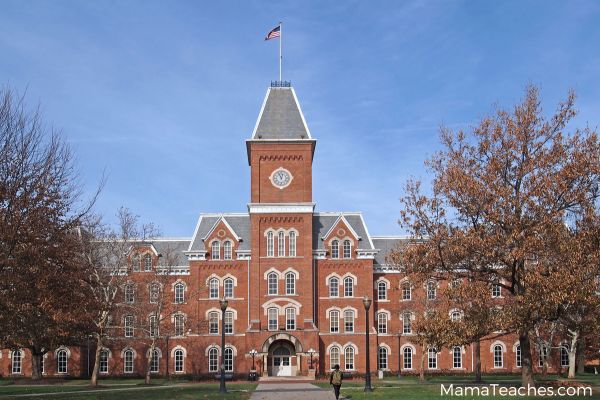
What Is a Good Fit College?
If your teen has started the college search process, you both may be overwhelmed.
The United States has around 3,700 colleges! How do you begin to choose?
While you can unearth plenty of data about each school, from size to rankings to location, what determines if your teen will thrive at the school?
These 15 questions help you uncover the factors that will determine your child’s success and happiness at a particular school.
Colleges with the desired features are “good fit colleges” for your teen.
They are the school where your child will thrive academically and personally.
It’s not about choosing the best school according to the rankings. It’s about choosing the best school for your child; that’s a matter of fit.
15 Questions to Determine If a College Is a Good Fit
Some of these questions your student should ask themselves.
You can also research the answers to the other questions or ask someone from the school.
Sign up for an in-person or virtual tour, or connect with a campus representative to get these questions answered. They will be happy to talk to you, I promise!
What Are the Housing Options for This School?
You may assume that every school has dorms for all its students. This is not the case.
Many colleges have more students than available housing (although some may have agreements with private housing providers).
If your student is counting on on-campus housing for all four years, ensure the college provides that.
You will also want to see what the dorms look like. Are they traditional, suite, or apartment style?
Make sure a college offers the type of living situation your child needs.
What Is the Campus Food Like?
This is a question your teen will want answered!
What are the various meal plans available? How much do they cost?
Most colleges have cafeteria-style dining halls, while others offer fast-casual options as well (even national restaurant chains).
Find out what is available and what it costs.
If your teen has dietary limitations (or allergies), find a school that will provide what they need.

Does This School Have My Intended Major?
While it’s true that most students change their majors at least once, you certainly want to select a school that has your teen’s major of interest.
If your student wants to be a nurse, ensure the school has a nursing program.
If your student is interested in engineering, pick a school with those majors.
Will I Get a Broad-Based Education?
Some schools (typically universities) require many credits in an individual major. Or there may be a set sequence of classes, each a prerequisite for the next.
This means that students must be dialed in on their major at the start of college or risk delaying graduation.
If your teen is unsure of what they want to study, they may do better at a school that provides a broader education and encourages exploration.
They should look at liberal arts colleges, which require students to sample various disciplines before deciding on a major.
What Is the Freshman Retention Rate?
The freshman retention rate reveals how many students return to the school for their sophomore year.
If students return, they are likely happy and engaged at the school.
Colleges with a freshman retention rate greater than 90% are safe bets that students tend to thrive at this college.
What Is the Four-Year Graduation Rate?
This question also tells you vital information.
Some colleges appear to offer many courses, but these courses may not be available every semester.
Students may have trouble graduating in four years if this is the case.
Students may also drop out due to grades, debt, or other fitness-related factors.
A four-year graduation rate of 70% or higher generally indicates that a college has the necessary academic support and advising to keep students on track.
What Are the Statistics on Job Placement or Graduate School After Graduation?
Does your student want to attend graduate school?
Look at the track record of each college in getting its students placed in grad schools.
Does your student want to enter the work world?
Ask about internship availability, career services, and the school’s alumni network.
How Many Students Study Abroad?
If your student wants to study abroad in college, then a study-abroad-friendly school is a must.
Some schools make it easy for students to study abroad. They have special advising, established programs, and dedicated financial aid.
These schools typically have a large percentage of their student body who study abroad in college.
Ask about this statistic if it matters to your student.
What are the additional fees for studying abroad? This is an integral question as well.
What Faith-Based Organizations Are on Campus?
Before applying to colleges, your student should determine if they want a faith-based education.
If so, a good fit college identifies with your student’s faith background. (There are around 1000 faith-based colleges!)
If your student is open to a secular college but intends to pursue their faith, you should ask about faith-based support at that school.
What kinds of faith-based organizations are on campus?
How many students attend the groups you are interested in?
How close is the nearest house of worship?
What Are the Academic Support Services?
If your teen has an IEP and needs accommodations, you should check what support services the college offers.
How many students receive support services? What do you need to do to receive those services?
Even if your student does not have a learning difference, they likely will need to take advantage of tutoring services, the writing center, and professor office hours.
Ask about the resources to help students.
What Is the Average Class Size?
Your teen likely has an opinion on the size of the school they want to attend. Some colleges have only a few hundred students.
Others can exceed 50,000 students.
Another number to consider is the size of the typical class and the mode of teaching.
Your student may do well in a large lecture-style class with a hundred others. They may join study groups and attend tutoring sessions.
Other students may struggle in a class that size and prefer a smaller class size. They may want the professor to know them by name.
They may favor a discussion-style teaching model instead of a lecture.
The same is true for online versus in-person classes. Larger schools may offer a wide range of courses, but many of those courses are online.
What type of class experience is best for your student? A college is a good fit if it offers that to your teen.
What Is the Campus Vibe?
What sort of college environment suits your student? Relaxed and outdoorsy? Studious and serious-minded? Quirky and artsy? Sports-oriented and energetic? Mission-minded and globally-oriented?
Ask someone at the college these questions to feel out the campus vibe:
- What type of students do well at this college?
- What are five words that describe students at your college?
- How do your students differ from students at other colleges nearby?
- What are the most popular campus events?
Can I Afford It?
This question takes some digging. You cannot look at the sticker price of a school and assume that is what you will pay.
Depending on your family income, some expensive private schools could cost you less than a public school, thanks to merit and need-based aid from the school’s endowment.
Start by researching the total cost of attendance, which includes tuition, room, board, and other fees.
You can fill out the school’s “net price calculator” (on every college website) to estimate what you might actually pay if you attended the school.
Speak to a financial aid advisor for a more accurate picture of what you may pay. Ask about additional scholarships and campus jobs.
Know the difference between grants (which you do not have to repay) and loans (which you will have to repay).
Do I Like the Location?
This is a question your student should ask themselves.
How important is it to be close to home?
Your teen may want to spread their wings and go away to school, but they can also have that “away” experience at a college in their state.
A more critical question to determine if a college is a good fit is its location setting: urban, suburban, or rural.
Some people enjoy the secluded, natural setting of a rural college with an enclosed campus.
Others may thrive in a vibrant campus immersed within a larger city.
A campus visit can help your student answer this question.
Do I Like the Climate?
This is another question your student must ask themselves.
Schools in colder states often show campus pictures in the fall; the trees are ablaze in red and orange, and the students are all wearing cozy sweaters.
That season can be lovely, but the academic year falls solidly in winter, and the freezing cold lasts from November to April. Is your student prepared for that?
Likewise, your Florida-raised, Sunshine State child may love the idea of the mountains in the Pacific Northwest, but will they be happy in overcast Seattle nine months of the year?
If your student wants to attend a college in a climate vastly different from your home, plan to visit that college during the bleakest time of the year.
That way, your teen will get an accurate glimpse of the climate and can make an informed decision about whether the college is a good fit.
Finding a Good-Fit College
College is a huge transition, but you can stack the deck in favor of success by choosing colleges that are a good fit for your student.
Ask these fifteen questions of every school your teen is considering.
This will help you both to narrow the field and increase the odds that your student will thrive in college.