
Fun Facts About Curling
Find out about this unique winter sport with these fun facts about curling.
What Is Curling?
February 23rd is “Curling Is Cool Day.” Okay, it’s cool! But what is it?
Here are some basic facts about curling.
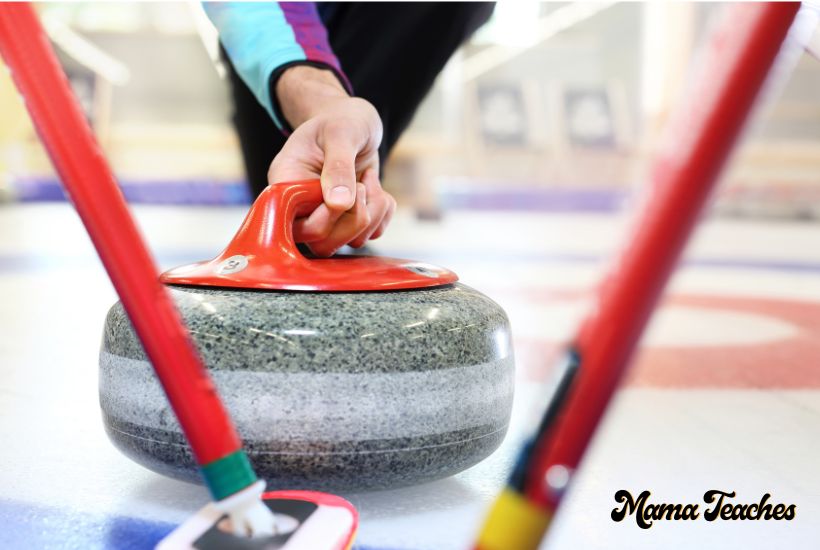
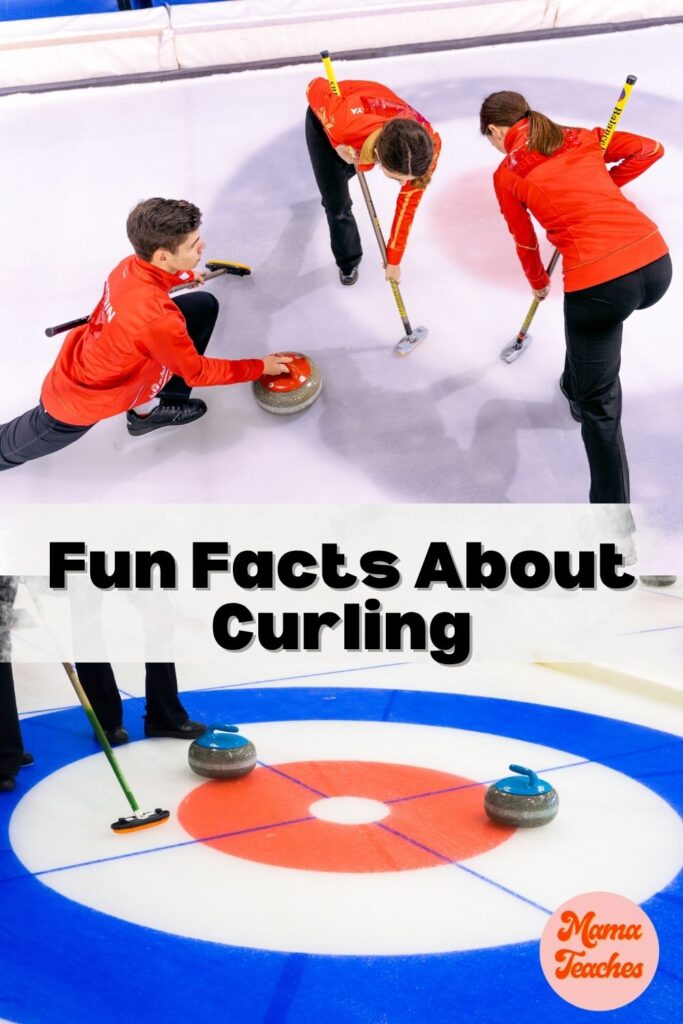
Curling is a sport where players slide a stone over ice to hit a target.
The target looks like four concentric circles.
The purpose of the game is to get your team’s stone closer to the center circle than the opposing team’s stone.
In that way, it is similar to the game of darts.
Players from each team alternate taking shots from across the ice.
Traditionally, each team has four players.
Now that you know some basic facts about curling, let’s slide into some fun facts about curling.
This article contains affiliate links to things that you might like.
10 Fun Facts About Curling
Get ready for Curling Is Cool Day on February 23rd by learning these fun facts about curling.
The Curling Target Is Familiar Looking
If you have ever seen the logo for Target, the superstore, you would recognize the curling target instantly.
The two symbols resemble each other, with some distinct differences.
The Target logo has three concentric circles (which means the circles are all inside one another with the same center).
The target in curling has four concentric circles.
The Target logo’s circles from innermost to outermost are in this order: red, white, and red.
The curling target’s circles are in this color order: white, red, white, and blue.
The target in curling is called the “house.”
The center circle (the white circle) of the house is called the “button.”
Landing your stone on the button is the ultimate goal of curling.
The target is embedded in the ice itself. It is a thin layer of vinyl sheeting that is frozen under the surface of the ice.
You can see the colors of the circles through the ice.
A Curling Stone Is Heavy
When you picture a curling stone, don’t picture a small rock you would skip across a lake in summer.
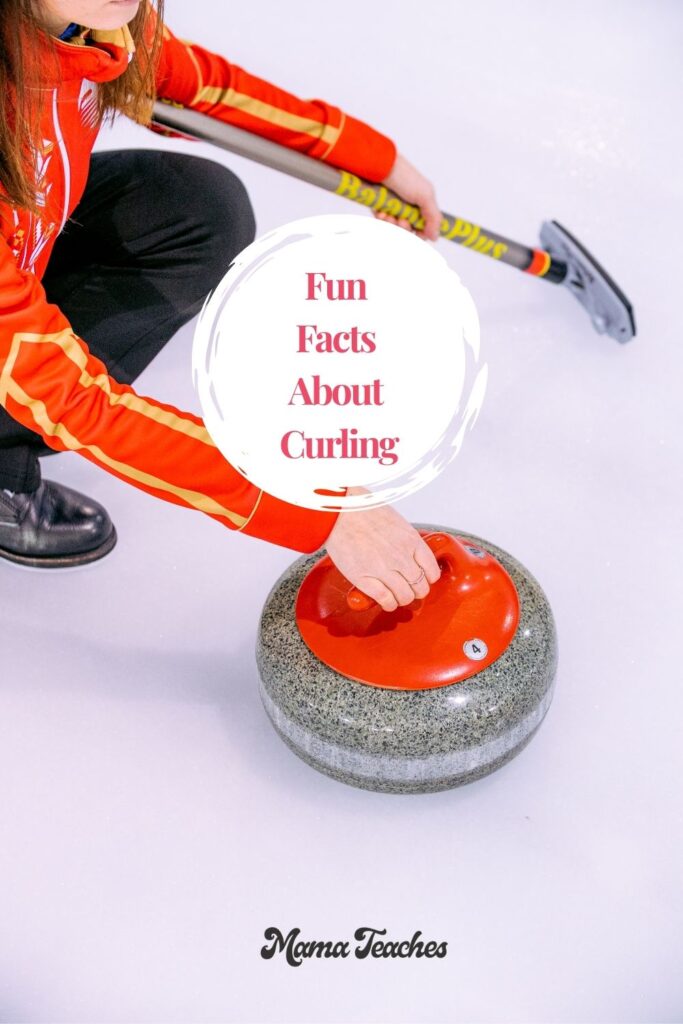
A curling stone has round edges and a flat top (picture a large jelly doughnut).
It is made of solid polished granite and weighs between 38 and 44 pounds.
The underside of a curling stone (the part that slides along the ice) is not entirely flat.
The center of the stone is slightly raised, leaving only a ring of stone that stays in contact with the ice.
This reduces friction and allows the stone to glide farther across the ice.
The top of the stone has a handle, allowing the player to grip and release the stone.
The team’s stones can be identified by their handle colors (for instance, one team might use red and the other yellow).
Each team throws eight stones per game. In North America, curling stones are called “rocks.”
Curling Players Use Brooms
Move over, quidditch! Curling uses brooms for sports equipment, too!
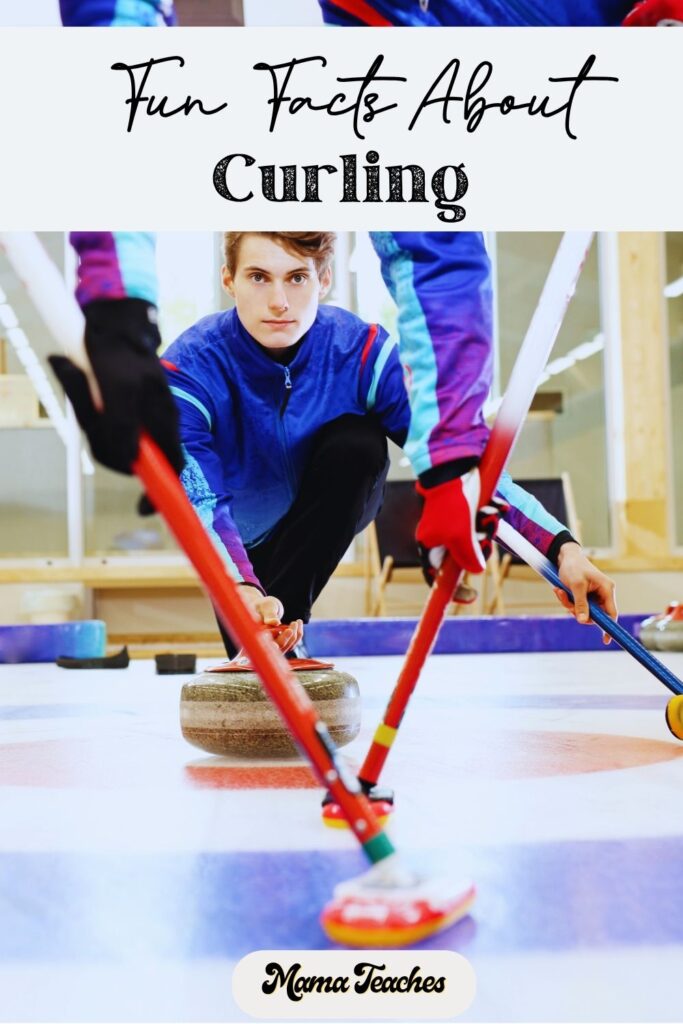
One player launches the stone by pushing it along the ice.
Once the stone is released, two other members of the team may use brooms to sweep the ice in front of the moving stone.
This action smooths the ice and causes the stone to slightly change angles to better aim for the target (or “house”).
Team Roles in Curling Have Special Names
Each team has four players with various roles.
Skip
The skip is the team leader and chief strategist. They stand in the house (the target) and make the calls to the other players.
Vice Skip
When it is the skip’s turn to throw the rocks, the vice skip stands in the house and calls the strategy.
Lead
The player on the team who makes the two opening throws.
Second
The second makes the second two throws after the lead’s turn.
All players (except the skip) use the brooms to sweep when it is not their turn to throw.
The Skip Uses Code Words and Signals
Communication is central to the winning strategy of any curling team.
The skip is the one who decides the strategy and calls the shots.
The skip stands in the house (the target) across the ice. That is 150 feet away from their teammates.
Due to this length, the skip uses hand signals and broom taps to indicate the direction and type of shots they want the thrower to use.
After the stone is launched, the skip must decide in the moment if they want the sweepers to sweep and change the stone’s speed and direction.’
The skip will use words with a long “o” sound (like “no” or “whoa”) to indicate that no sweeping is required.
The skip uses code words to indicate they want the sweepers to sweep. These could be “yep,” “hooray,” or “sweep.”
The skip will also use hand signals in conjunction with code words to indicate sweeping or non-sweeping.
Curling Originated in the 1500s in Scotland
The first recorded game of curling happened in 1511 in Dunblane, Scotland, when a pond was drained of its water.
In the wintertime, Scottish farmers could not work the fields. Entire villages would congregate at the local frozen pond to play the game in the early evening.
The Scottish sometimes called curling “the roaring game” because of the sound the stone made as it traveled over the bumpy ice of the pond.
The name “curling” comes from the motion of the stone as it curves its way across the ice.
Curling Is an Olympic Sport
Curling became an Olympic sport in 1998.
Interestingly, the Olympic Committee decided that 1998 was not, in fact, the first Olympic curling competition.
In 1924, the Winter Olympics held a curling game as part of “Winter Sports Week.”
No medals were given to winners at the time.
In 1998, the Olympic Committee decided to award medals over sixty years later to the winning teams from Great Britain, Sweden, and France.
The Ice Is Bumpy
The ice is a major factor when it comes to curling.
The surface of the ice should be 23 degrees Fahrenheit.
The surface of the ice is sprayed with a mist of water, creating tiny bumps like the rind of an orange peel.
This forms what is called “pebbled ice.”
The stone moves across the pebbled ice, and the sweeping motion smoothes the pebbles to make the ice slicker.
The ice is re-pebbled before each game of curling.
Curling Brooms May Have Horse Hair
Prior to the 1950s, curling brooms looked like regular ones you would find in your house.
The handles were made of wood and the bristles were made of fabric, hog’s hair, or horse hair.
Today’s curling brooms have handles made of carbon fiber.
Although bristle technology has improved, the curling federation worried new fabric brush heads would change the sport and take away much of the challenge.
In 2016, the World Curling Federation authorized only one type of broom brush head for competition.
The Soles of Curling Shoes Are Different
Due to the way a stone is launched, curlers need one shoe that can grip the ice (the “gripper”) and another that can slide along it (the “slider”).
That is why curling shoes have two distinct soles. The slider shoe has a slippery bottom made of Teflon.
When not sliding, the player can slide a cover over the sole to walk on the ice without slipping!
The gripper shoe has a rubber sole like most athletic shoes.
Books About Curling
If you liked these fun facts about curling, you will enjoy reading more about the sport.
Curling Word Search
This game book includes forty word search puzzles for fans of curling.
Curling for Beginners
This book has everything you need to know to get started with this sport.
Written in Stone: A Modern History of Curling
Learn about the top competitors in Canadian curling and the great moments of the last 30 years.
All About Curling
Did these fun facts about curling give you the urge to try the sport?
If you don’t have access to an ice rink, cultivate your skills with this curling tabletop game.
It’s a great way to learn the rules and strategy of the game (just on a much smaller scale).