
Navigating Homeschool Record Keeping, Progress Tracking, and Reports
Some of the most stressful parts of homeschooling aren’t the actual lessons or planning – it’s the record keeping, tracking progress, and creating reports that can be used at the end of the school year to show evidence of education and growth that can be a struggle to manage.
When you’re homeschooling multiple children, it becomes even more to juggle and remember.
If you’re having a difficult navigating that aspect of homeschooling, please know that you’re not alone. It’s common and almost everyone struggles with it.

The good news? I found a new (to me!) homeschool app that can help make it easier to keep track of lessons, progress, objectives, and even creating reports. Let me introduce you to Strew!
Making Homeschool Record Keeping Less Overwhelming
Now, I know what you might be thinking because it was pretty much my first thought, too: Do I really need another app to keep up with?
But Strew isn’t something that feels like one more thing you have to manage. It’s designed to take some of the things you’re already doing as a homeschool parent and make them much easier to document.
That distinction matters.
Because you’re already doing the field trips (virtual field trips count!), science experiments, read-alouds, math lessons, nature walks, museum visits, documentaries, art projects, and random deep dives into whatever your kids suddenly become obsessed with.
The problem is remembering all of it six months later when you’re trying to put together records of what your child actually learned.
That’s where Strew comes in.
Just Add What You Did
One of my favorite things about Strew is how easy it is to add a record of an activity.
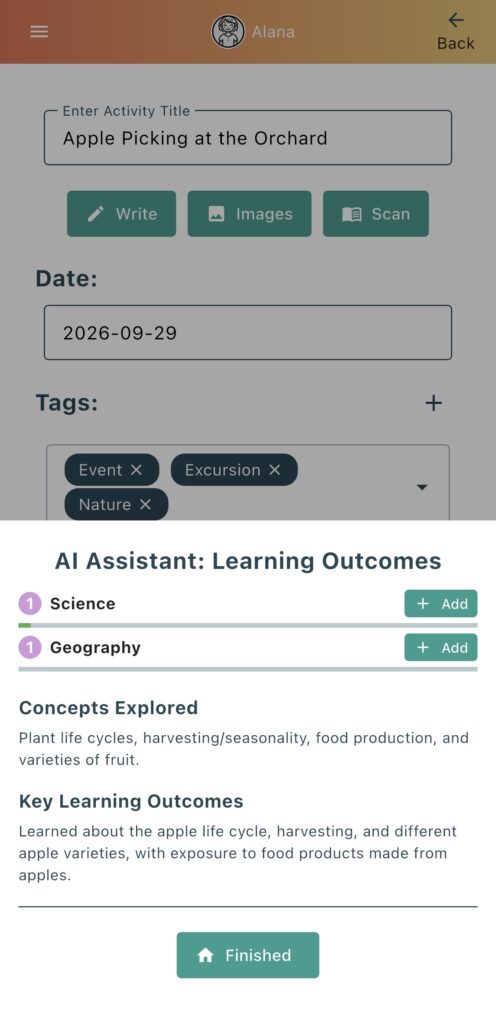
You don’t have to sit down and write a beautifully worded educational objective every time your child does something. (Because, really, who has time for that?)
Instead, you can add the activity and let Strew help with the rest.
Maybe you spent the afternoon at a science museum. Maybe your child baked cookies and practiced fractions without realizing they were doing math. Maybe you watched a documentary about the Revolutionary War that sparked a two-hour conversation and resulted in your child looking up approximately 47 additional things on the internet.
Those things count.
They are part of your child’s education, and Strew gives you a place to actually record them.
That alone can take away so much of the “Wait…what did we even do this year?” panic that can creep in when it’s time to create your homeschool records. I used to be a hot mess when I was pulling portfolios together at the end of the year!
I will note that in order for the AI to work properly, you have to write a description of what you did. That’s how the AI summarizes it and formulates the learning objective. No description, no summary. But don’t worry – it literally takes less than 30 seconds to type it in!
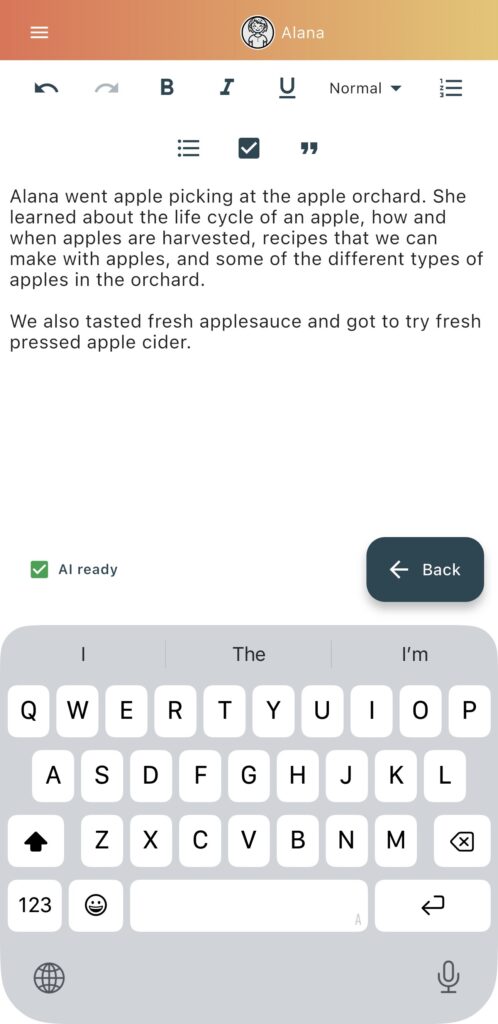
Also, another thing to note…you can literally add a quick note anytime throughout the day. Waiting for coffee to brew? Add that science activity you did in the morning. Sitting outside while the kids play? Add in today’s math assignment.
It’s so easy to add them and make it just a stress-free part of your day that has real, helpful benefits.
Let AI Help With the Tedious Part
This might be the part that made me the most excited about Strew.
You know how you know an activity was educational, but then you have to figure out how to describe exactly what your child learned from it?
Strew can use AI to help turn the activities you enter into the type of information you may need for your homeschool records and end-of-year reports.
So instead of staring at a blank screen thinking, How do I make “we went to the aquarium” sound educational?, you already have a tool helping you identify the learning that actually happened.
And to be clear, this isn’t about making things up or trying to make your homeschool look more impressive than it is.
It’s about naming and classifying the learning that’s already happening.
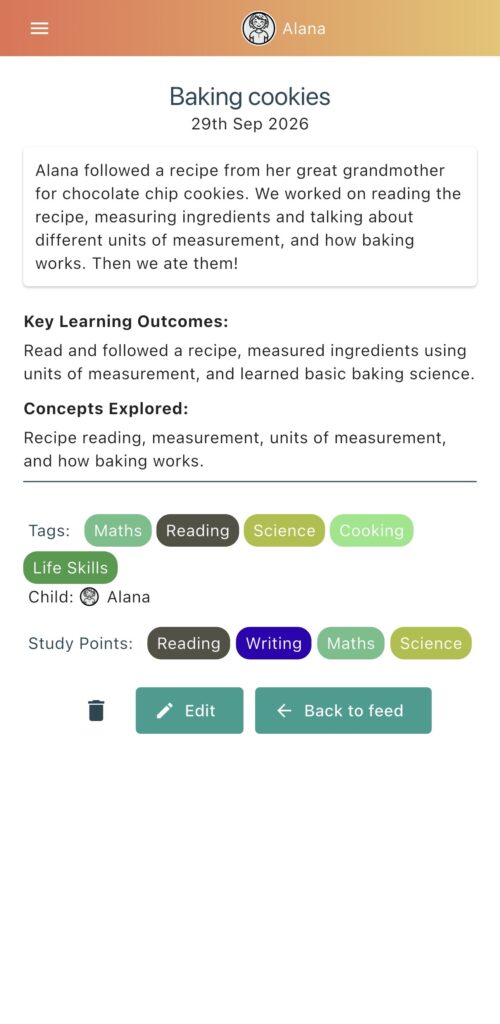
That’s especially helpful if your homeschool doesn’t look like six hours a day sitting at a desk working through textbooks. (And, really, if it looks like that, friend, please take a step back and breathe, because homeschooling is about flexibility.)
A lot of learning happens through conversations, experiences, projects, travel, games, books, hobbies, and everyday life. Strew helps you capture that learning while it’s happening and organize it into something useful later.
Another Side Note: Strew just recently launched a feature where you can scan a book your child is reading and it creates a list of read books for you. What?!?! The state that I live in requires a list of all books that we used and read throughout the year so this feature literally almost made me cry tears of joy. Ha!
See Where Your Homeschool Time Is Actually Going
There’s another feature I really like: Study Points.
As you add activities, Strew gives you a way to see how much attention different subject areas are receiving.
And I think this is useful for a completely different reason.
It’s not just about proving what you’ve done, it’s also about helping you figure out what you might want to do next.
You may look at your Study Points and realize that you’ve done tons of science and reading lately but haven’t spent nearly as much time on social studies.
That’s not a reason to panic.
It’s simply information.
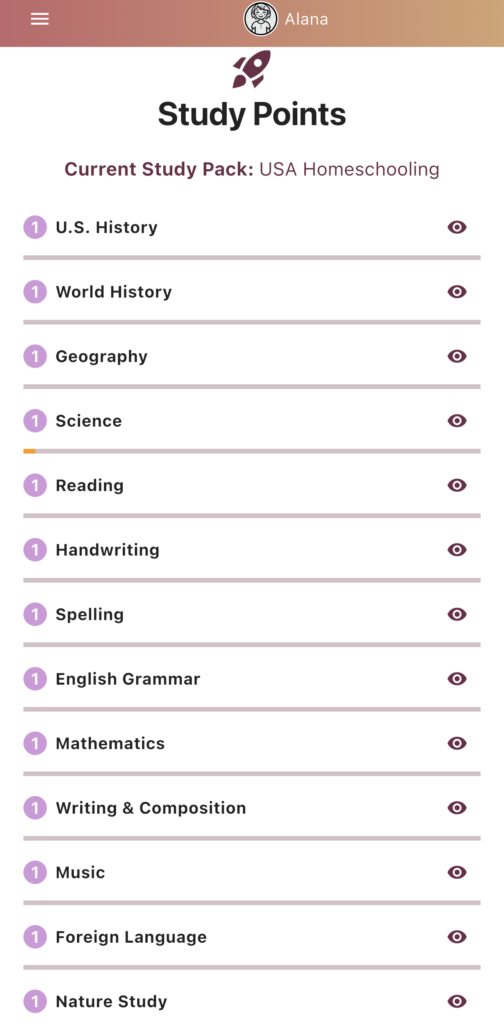
Maybe next week you decide to visit a historic site, grab a few books from the library, watch a history documentary, or work on a geography project.
Instead of relying on that nagging feeling of “I feel like we haven’t done enough…”, you can actually see where your time and learning have been concentrated.
And I don’t know about you, but I will take actual information over homeschool-parent guilt any day. (To be transparent, I’ll definitely still have the homeschool-parent guilt because it’s how I roll, but maybe there will be less??)
It Can Grow With Your Homeschool Year
I also think Strew becomes more valuable the longer you use it.
If you add activities as you go, you’re essentially building a record of your homeschool year without having to sit down at the end of the year and recreate everything from memory.
Future You will be very grateful for this.
Rather than digging through old planners, scrolling through your camera roll, searching your email for field trip confirmations, and trying to remember what on earth you were doing in October, you’ll already have a running record.
Side Note: Oh, I don’t think I mentioned it, but you can upload photos too! This is really helpful if you’re doing a project or science experiment and want to include visual proof. Plus, at the end of the year it’s fun to look back and see all of the memories in picture format.
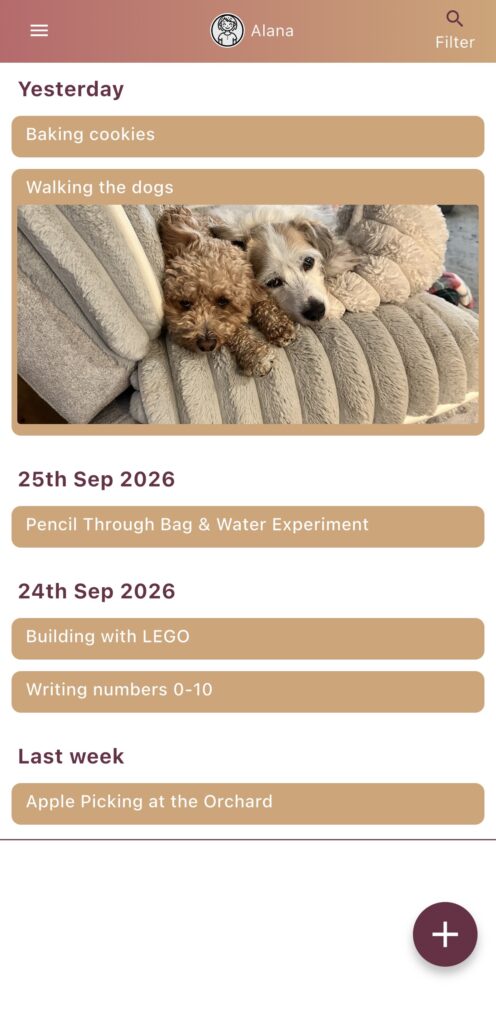
Then, when you need a report, the information is there.
That’s the part of homeschool record keeping that I’ve always thought should be easier. We have enough to do without stressing out over records.
Record Keeping Doesn’t Have to Become Another Subject
Depending on where you live, your homeschool record-keeping and reporting requirements may look very different from someone else’s. Some states require very little documentation, while others have specific requirements for portfolios, evaluations, attendance, subjects, or progress reports.
So you’ll still want to make sure you know your state’s homeschool requirements and keep whatever documentation is required.
But the actual process of keeping track of your homeschool doesn’t have to be complicated.
That’s what I like about Strew.
It’s not asking you to homeschool differently so that you can create better records.
It’s helping you create better records from the homeschooling you’re already doing. That’s a really important difference.
Less Tracking, More Homeschooling
There are already approximately 9,472 things running through a homeschool parent’s brain at any given moment.
Did we do math today?
Where did that library book go?
Does building an elaborate Minecraft village count as something educational? (Yes! It absolutely does! 😂)
Keeping track of every learning experience shouldn’t have to take up another giant chunk of that mental space.
Tools like Strew can take some of the administrative work off your plate by giving you an easy place to record what you’re doing, helping you identify the learning behind those activities, showing you where your homeschool time is going, and making it much easier to pull everything together when you need reports later.
And that means you can spend less time trying to document your homeschool…
and more time actually homeschooling. Crazy concept, right?!?
If record keeping is one of those tasks you keep putting off because it feels overwhelming, give Strew a try and start by adding a few things you’ve already done this week.
You might be surprised by just how much learning has been happening all along.