Integrating Art & STEAM: How to Teach Science Through Drawing and Design
Don’t forget what the “A” in STEAM stands for! Find out how to enhance math and science with artwork.
What Is STEAM?
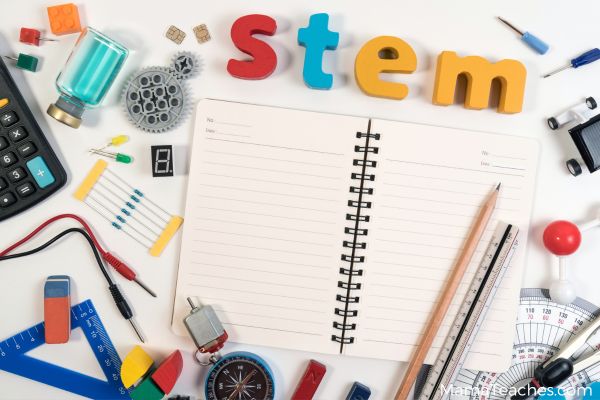
In the early 2000s, the education world was abuzz with the acronym STEM, which emphasizes the interconnectivity of science, technology, engineering, and mathematics.
Just a few years later, Dr. Georgette Yakman, an educator and researcher, published an article with the acronym STEAM.
The addition of the letter “A” added “art” to the mix. Yakman argued that math and science need creativity, design, and innovation. Those are the bedrock of art.
If you doubt that math and science connect to art, you need only look at the paintings of animals by John James Audubon or the mathematical tesselation etching of M.C. Escher.
Moreover, scientists often create diagrams, visuals, and models as part of their work.
The technology that humans use often incorporates a visual element (think of video games, websites, and icons).
Art itself would be nothing without mathematics. The concepts of symmetry, angles, proportion, and shapes are mathematical by nature and present in most artwork.
Do you need any more reasons to add art to your STEM curriculum? Here’s one more: kids love it.
Lesson Plan Ideas That Turn STEM into STEAM
Enhance your STEM lesson plans with an artistic component by incorporating drawing and design elements.
Here are some ideas to get you started.
Science Lessons with Art
Here are some ways to incorporate art into the natural sciences.
Watercolor Cell Diagrams
Sketch and label a plant or animal cell on a piece of watercolor paper. Then use watercolors to paint the organelles inside the cell.
Ecosystem Collages
Use copies of nature magazines, such as National Geographic Kids and Ranger Rick, to find pictures of animals and plants to create a collage of a habitat or a food web.
Periodic Table Portraits
Research an element of the periodic table to give an oral presentation. Students can create a visual aid, such as a collage, that fills the element’s box in the periodic table.
Life Cycle Comics
Insects and amphibians go through multiple form changes over the course of their life span.
Turn the metamorphosis of a butterfly or frog into a comic.
Galaxy Painting
Use paint spattering to create a backdrop for a space presentation.
Microscope Sketch Journals
Have students draw what they see after looking through a microscope. Create a whole notebook!
Use colored pencils to make the drawings more true-to-life.
Chlorophyll Art
Extract the chlorophyll from plants with this experiment and then turn the resulting green shape into a piece of art by adding doodles.
Technology Lessons with Art
Enhance your tech lessons with art.
Technical Presentations
Use an artistic slideshow tool like Prezi to create a visual aid for a presentation on technology.
Coding Activity
Coding worksheets teach kids to follow precise instructions (an excellent foundation for learning about computer code).
Follow the instructions to create a picture. Check out these free worksheets for St. Patrick’s Day and Summer.
We have even more free coding worksheets in our Freebies Library.
Stop-Motion Animation
Create short films that explain scientific processes, such as the water cycle or how simple machines work.
Create an App
Older students can use a student-friendly app creator (like MIT App Inventor or Thunkable) to design and build their own apps.
Minecraft Science
You can use Minecraft Education Edition for all kinds of science lessons. Check out this list of ideas.
Engineering Lessons with Art
Bridge-Building Glow Up
Experiment with different popsicle stick bridge designs. Then use paint, markers, or stickers to give them visual appeal.
Rube Goldberg Machines
Rube Goldberg machines make simple processes complex using creative design.
Have students design colorful Rube Goldberg machines using materials such as duct tape, toilet paper tubes, marbles, dominoes, and golf balls.
Are you looking for something ready-made? Kids can design and create their own colorful marble track.
The Engineering Design Process Infographic
Engineers don’t use the scientific method to design and build; they use a similar but specialized process.
Have students create a visual infographic for the engineering design process.
Math Lesson with Art
Can you do art projects in math? Absolutely! Check out this list of math project ideas for elementary, middle, and high school.
Symmetry Practice
Fold the paper in half and then unfold it. Use blobs of paint on one side and refold the paper to create a symmetrical picture.
For something less messy, check out these worksheets that teach the concept of symmetry, which is essential for math and art.
String Art Polygons
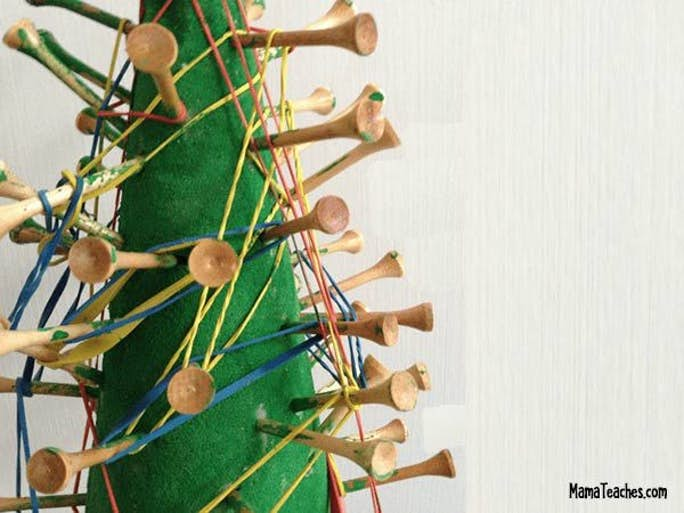
Use geoboards or pegboards to create polygons using string or rubber bands.
Geo Art
Use wooden geometric tiles (or construction paper shapes) to create collage art.
Fibonacci Flower Art
Create flower artwork with flowers that have petals in the Fibonacci sequence (for example, 3, 5, 8, and 13).
Enhancing Math and Science Lessons with Art
Art is not the opposite of math and science; it is a component of both subjects.
Bring creativity and visual elements to math and science by incorporating art into your STEAM lessons.