Sight Words vs. High-Frequency Words: What’s the Difference & Why It Matters
When teaching a child to read, sight words and high-frequency words are all important. But what’s the difference? Find out what they are and how to teach them.
Words for Beginning Readers
Let’s say this up front: there are many reading programs out there, each with its own approach and emphasis.
But all reading programs teach foundational words before asking kids to read longer, more complicated words.
These foundational words fall into a few categories.
C-V-C Words
C-V-C stands for consonant-vowel-consonant pattern. These are the words that most children learn to read first: cat, dog, mud, etc.
They are always words with short vowel sounds.
High-Frequency Words
Some words occur more frequently than others in our language. These are called high-frequency words.
For example, the word “you” does not follow the C-V-C pattern, but it occurs so often in writing that it is worth learning early.
Other high-frequency words include and, that, and in.
Reading experts have compiled lists of these words in order of frequency. (You may have heard of Dolch or Fry lists.)
You can find a list of all the high-frequency words (and the grades at which they are introduced) here.
Sight Words
Letters, alone and combined, stand for sounds called phonemes.
When you learn to read through phonics, you learn the phonemes the letters represent, and then you “decode” the word to read it.
For example, the word ship consists of three phonemes: /sh/, /i/, and /p/.
Most words follow phonetic patterns. But some words don’t.
A reader’s knowledge of phonetic patterns will not help him. He needs to learn these words by sight.
For example, the word said cannot be decoded by phonics (if you tried, you would say the long a sound). You must recognize that word by sight and remember how it is pronounced.
That is why these words are known as “sight words.”
Are Sight Words and High-Frequency Words the Same?
Sight words and high-frequency words often overlap, but they are not the same.
Confusingly, many sight words are on the high-frequency word list. Consider the words people, friend, to, and said.
These are common words, and they are also impossible to decode phonetically.
But this does not mean the two word categories are the same.
Many words qualify as sight words but are not high-frequency words. Consider the words choir and height.
They are sight words because you cannot decode them phonetically, but they are not in the top 1000 most common words in English.
How to Teach Sight Words
Sight words cannot be decoded, so the only way to teach them is through memorization.
Flashcards that pair words with pictures are an ideal place to start. From there, you can graduate to flashcards with the word alone.
Any reading program will tell you there is only one way to teach sight words: memorization.
How to Teach High-Frequency Words
The way to teach high-frequency words is more debatable. If you use a strict phonics program, your child may only memorize the high-frequency words that are also sight words.
These words include of, the, and was.
But your reading program may wait to teach some high-frequency phonetic words until their patterns are introduced.
These words include he, an, and all.
The downside to waiting on phonics is that these are common words that an early reader will encounter. Learning them early could increase reading confidence.
The upside to waiting is that it underscores phonics as the way to read. Too often, young readers lean on memorization, only to experience a slump later as reading vocabulary increases exponentially.
Fun Ways to Teach Sight Words or High-Frequency Words
Whether you are helping your child learn sight words or high-frequency words, these simple games will make the process fun.
Feed the Monster
Decorate a shoebox as a monster with construction paper. Cut a hole for the mouth.
Set out a small number of flashcards, each with a sight word or high-frequency word.
Play a game where the monster is hungry for various words. You say the word, and the child chooses the correct word to feed to the monster.
Hopscotch
Draw hopscotch on the floor, but add a word card to each square.
When the child throws the marker (a pebble or bean bag) onto the square, he must hop over that square on the way forward, then pick up the card on the way back.
When he picks up the card, he should read the word on it.
Fly Swatter Race
This game can be played in teams or individually.
Set an array of word cards on the table. (For early readers, start with two.)
When you say the word, the child should swat the correct card with a fly swatter.
If you play in teams, two children can compete against each other to swat the correct word card (you will need two fly swatters).
Word Tic-Tac-Toe
Draw a large tic-tac-toe game board, and write a word in each square.
Before the child can choose a square to mark with an X or O, she must read the word.
Go Fish
Create a deck of twenty word cards, two of each word.
Deal five cards to each player (and have a deck of ten cards).
Play “Go Fish” with the word cards to create pairs.
Sight Word BINGO
Create BINGO gameboards with words on them using a free online template generator.
When you call out the word, the child puts a marker on the correct space.
Scavenger Hunt
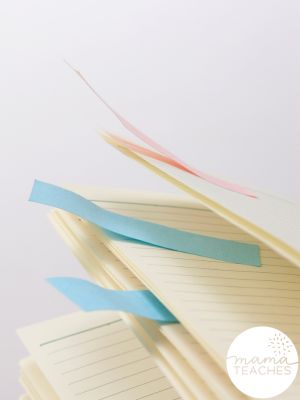
Write words on sticky notes and place them around the room or house.
Give your child a word to find and retrieve. Repeat with the remaining words.
Teaching Sight Words and High-Frequency Words
Sight words and high-frequency words are not the same, but they are both important categories of words for young readers to learn.
Play these simple and effective games to give your young reader a strong start.