Simple Routines to Build Executive Functioning in Kids
Try these simple routines that will help build executive functioning skills in kids.
How to Grow Executive Function Skills
Executive function skills are a set of mental processes that help people be successful in life.
The list of executive function skills includes time management, planning and organization, emotional regulation, working memory, focus, impulse control, and mental flexibility.
While these skills develop over time (and some not fully until a person’s mid twenties), you can build these skills in kids with routines, activities, and feedback.
Routines to Build Executive Function Skills
These simple additions to the day can give kids important practice in executive functioning.
Morning Routines
Morning routines, at home or in school, help build time management and focus.
Explore these morning routines for homeschool and the classroom.
Whatever the application, a set routine for the start of the day can make a big difference in building executive function skills in kids.
Keep the routine consistent. Do the same thing every day.
If you have a lot of items in the routine (more than 5), break it into chunks (before or after breakfast, for example, or before or after the bell).
Consider asking your child to collaborate with you in crafting the morning routine. This will give them a sense of ownership and enthusiasm for the tasks. It will also help kids get started on tasks if they normally tend to avoid them.
Visual Checklists
A checklist helps kids keep track of what they need to do. It enhances the executive functioning skills of working memory, planning, and organization.
While a written checklist can work well for teens, a visual checklist or visual schedules for executive functioning helps younger kids and those with ADHD.
A visual checklist has pictures or icons that accompany the written text.
For example, if brushing teeth is an item on a checklist, you would draw a picture or use an icon of a toothbrush, then write “Brush your teeth” beside it.
The pictures or icons help kids remember the items in a routine.
Place the visual checklist in a space the child or teen frequents, like the kitchen, bedroom, or bathroom mirror.
If you are using visual checklists for school, you can find pictures or icons that correspond to your instructions.
For example, if you want kids to “Stop, Listen, and Think” when you give instructions, you can post the reminder in a highly visible area with pictures such as a stop sign, an ear, and a brain.
Rhythm-Based Scheduling
Rhythm-based scheduling means you create predictable patterns of behavior.
A rhythm-based schedule is not about set times; it means that each event triggers a certain response.
One activity flows into the next.
For example, before meals, the child should wash their hands.
After breakfast, the child clears their dishes.
After recess, children should drink water, grab their folder, and take a seat.
Young children benefit from a rhythm-based schedule. You can provide reinforcement for each activity through song or chant-based cues.
An example of a cue song could be this one to the tune of “London Bridge Is Falling Down.”
“Before we eat, we wash our hands,
Wash our hands,
Wash our hands.
Before we eat, we wash our hands
For twenty seconds.”
Rhythm-based scheduling helps with the executive function skills of time management, focus, and cognitive flexibility.
Need Help With Executive Functioning at Home?
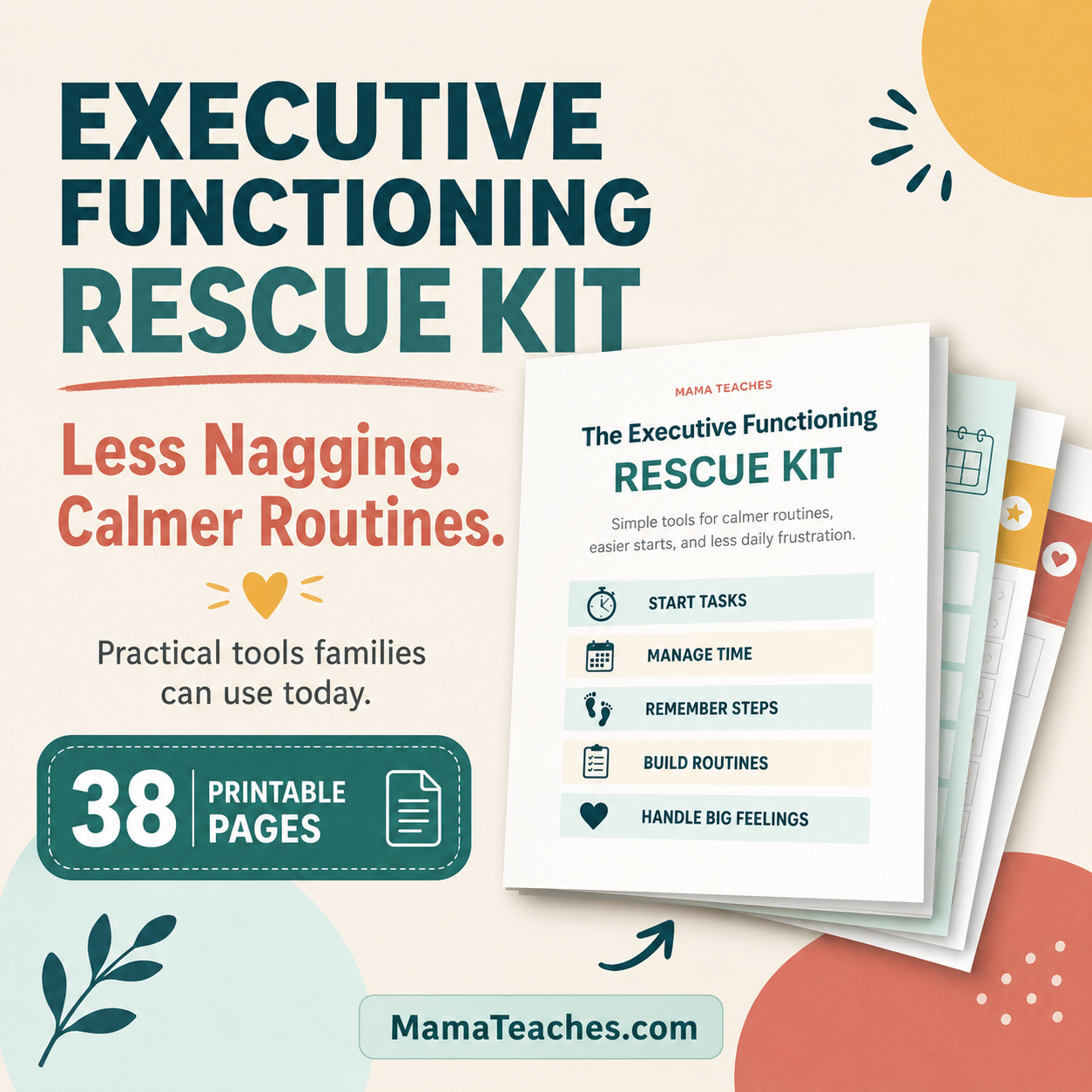
When starting, remembering, managing time, staying organized, or handling frustration becomes difficult, the Executive Functioning Rescue Kit for Families can help. Inside, you’ll find supportive parent scripts, simple rescue strategies, and practical printable tools designed to create calmer routines with fewer repeated reminders.
Circle Time
Many elementary classrooms and homeschools start the day with a morning meeting (or circle time).
This time is ideal for asking the child to set a goal for the day.
The goal could be practical, e.g. “I want to finish a book today,” or character-related, e.g., “I want to use kind words with my sister.”
Goal setting gives children a chance to practice planning, an executive functioning skill.
Beat the Timer
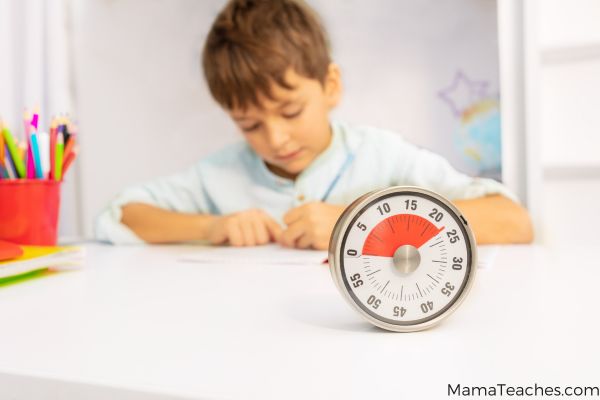
Help build time management skills by using a visual timer for tasks.
Motivate kids to accomplish a task by turning it into a game of “beat the timer.”
You can even set rewards for beating the timer, such as adding beans to a jar to save up for a trip to the ice cream shop or the zoo.
Timed tasks help kids learn the executive functioning skill of time management and can help kids who struggle with time blindness.
Routines for Kids to Practice Executive Function Skills
If you want to build muscles, you lift weights.
To build executive function skills, you can use activities and routines to increase them. Don’t be afraid to teach executive functioning skills early on. The more practice a child has, the easier it is for skills to “stick”.
These simple routines will help your kids master the skills they need for success in life.