Teaching Executive Function Skills: Strategies to Help Kids Stay Organized and Focused
You want your kid to have the skills to manage daily life and achieve their goals. How do you help them? Teach them executive function skills.
What Are Executive Function Skills?
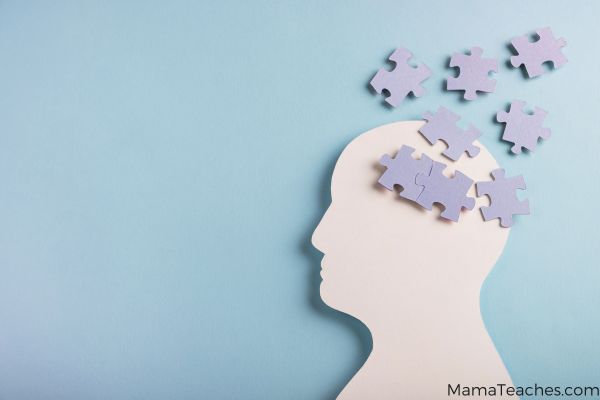
Executive function skills encompass a range of mental abilities that enable a person to stay organized, focus, manage their daily life, and achieve their goals.
These skills include planning and organization, impulse control, working memory, time management, and emotional regulation.
While some children seem to learn these skills intuitively as they grow, others require more systematic instruction and practice to master them.
This is particularly true for children with ADHD because they struggle more with organization, focus, and impulse control. In fact, there’s a link between executive functioning skills and ADHD that explains a lot of the struggle students with ADD/ADHD have.
Thankfully, these strategies will help all children master the all-important executive function skills.
How to Teach Planning and Organization
These strategies will help kids learn to plan and stay organized.
Make the Schedule Visual
Don’t expect to-do lists and schedules to stay in the child’s brain.
Keep these schedules front and center. Use checklists, calendars, and planners, and place them in a visible spot. Using visual schedules to support executive functioning is an important step in helping kids manage their time.
Consider a digital calendar for the whole family. (Check out the Skylight calendar, which is a touchscreen calendar and list maker.)
Keep a Planner
Planners aren’t just for adults (nor are they just for school).
Kids can also keep planners, such as this one created specifically for children with ADHD.
Check out this article on teaching kids to use a planner.
Break Tasks into Small Bites
When writing to-do lists, break big assignments into smaller steps.
Instead of writing “Clean your room,” list the specific tasks involved, such as “Make your bed, pick clothes off the floor, put toys into bins, etc.”
Daily Check-Ins
Just because you assign a task does not mean your child or teen will allocate the time to complete it.
Check in daily to see what has been done and what still needs to be done.
Need Help With Executive Functioning at Home?
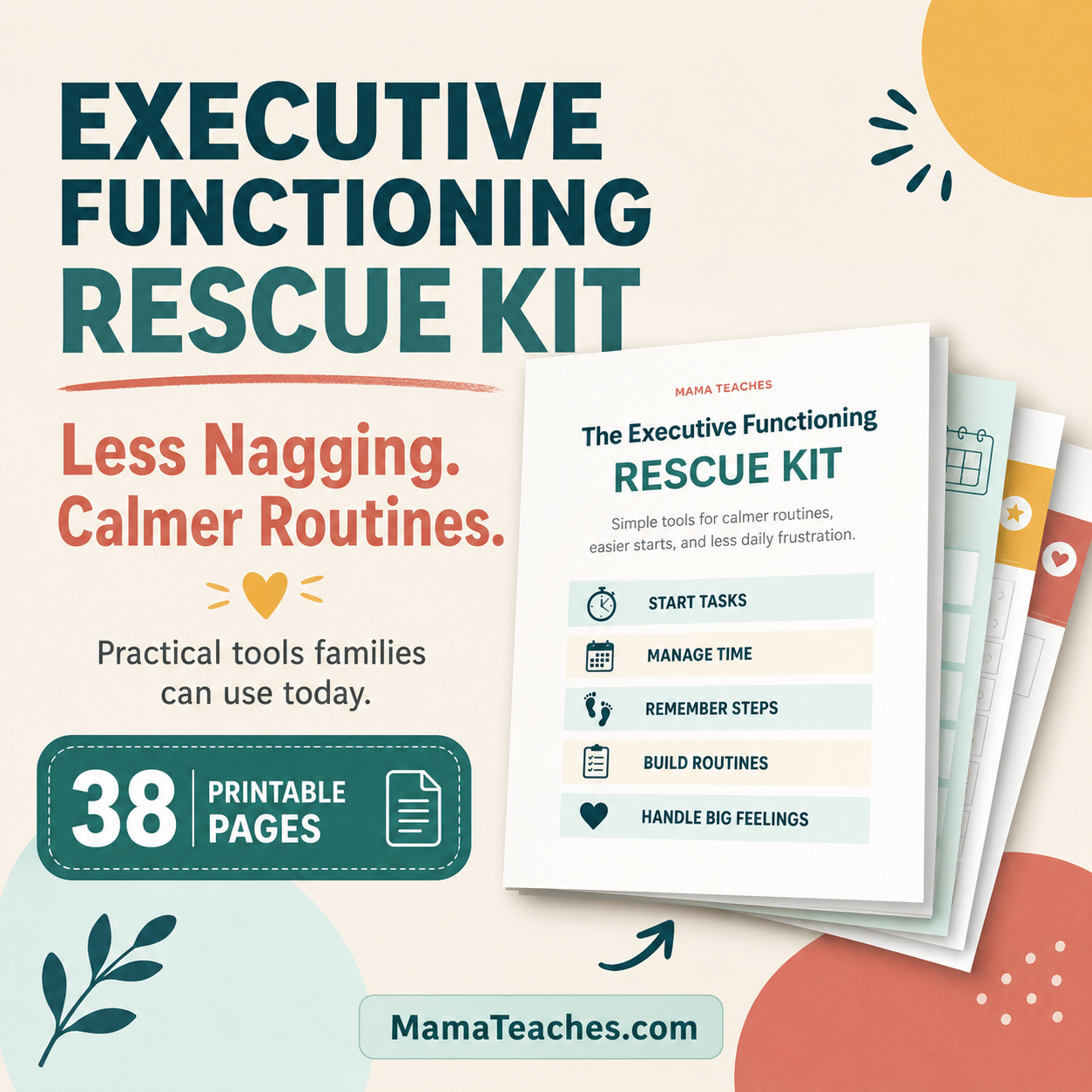
When starting, remembering, managing time, staying organized, or handling frustration becomes difficult, the Executive Functioning Rescue Kit for Families can help. Inside, you’ll find supportive parent scripts, simple rescue strategies, and practical printable tools designed to create calmer routines with fewer repeated reminders.
How to Enhance Working Memory
Working memory is the “sticky note” of the brain. It is the information stored for immediate recall.
It is essential for learning and problem-solving tasks, and many students need to strengthen working memory as they build their executive function skills.
Use Visual Reminders
Create information prompts, such as sticky notes and cue cards labeled with keywords.
If the child needs to keep track of the time for a task, use a visual timer that the child can see as it counts down.
Teach Memory Techniques
Memory can be enhanced; use the tricks of the trade!
Teach mnemonic devices such as acronyms (the Great Lakes are HOMES), rhymes (“Columbus sailed the ocean blue in 14 hundred and 92.”), and chunking (start with a small piece of information and then add onto it).
Utilize visual cues, such as graphics and hand signals, to enhance memory.
Repeat Directions
Directions are essential, but many kids don’t absorb what you tell them.
First, get their attention. Then give the directions.
Finally, ask the child to repeat the directions back to you. This ensures they understand what is being asked and can remember it.
Play Memory Games
Have you ever noticed that long-time servers can remember what you order without even writing it down?
That is because memory is a little like a muscle; it strengthens with practice.
Play games that use working memory, like matching games (check out these dinosaur, mermaid, and Christmas versions), Simon Says, “I am going to Grandma’s house,” and skip counting or backwards counting.
How to Teach Impulse Control
Teaching kids to think before they act is an essential executive function skill. The ideas below can help teach kids impulse control so that they can think before they act or react.
Design a “Stop and Think” Signal
Come up with a hand gesture that reminds your child to stop and think before they act.
Use this visual cue to help your child when they are tempted to act out.
Role Play
If your child reacts poorly to specific situations, try role-playing appropriate responses ahead of time (or afterward).
Next time, they may remember the appropriate response and act accordingly.
Play Waiting Games
Practice games that require waiting, like Red Light, Green Light, Freeze Dance, Mother, May I, and Duck, Duck, Goose.
Some board games also help with taking turns (and waiting), such as Uno, Jenga, and Guess Who.
How to Teach Time Management
Time management is an executive function skill that will help children achieve their goals.
Sometimes, time blindness in kids can hinder their perception of time, which makes time management nearly impossible. Thankfully, there are ways to overcome it.
Use Visual Timers
If the child needs to keep track of the time for a task, use a visual timer that the child can see as it counts down.
A Time Timer displays the remaining time in a pie graph format.
This visual timer also includes a digital countdown.
Timers are not just for young kids. Even teens (and adults) benefit from timing tasks.
Online focus timers (these are called Pomodoro timers) help people focus on tasks (like writing papers or practicing musical instruments).
This Pomodoro timer grows virtual trees as you successfully focus on your tasks (and stay off your phone).
Estimate Time
Help your kids become a master of time (and not let it master them).
Ask them to estimate the amount of time it will take to complete a task. Then use the visual timer as an accountability aid.
You can create a daily schedule with assigned times for various tasks.
If you want to combine the to-do list with a timer, this simple Pomodoro timer allows you to assign times to various tasks.
Create a Routine
Established morning and evening routines will help your child start and end the day on a positive note. Routines that build executive functioning skills are an important piece to learning how to regulate everything from time to emotions to obligations.
How to Teach Emotional Regulation
Emotional regulation is a key executive function skill.
Teach Kids About Emotions
Learning to identify emotions is the first step in understanding and managing them.
Teaching kids a “feelings vocabulary” by using a feelings chart (with emojis) for young kids and the feelings wheel for older kids.
Create a Calming Space
Designate a space for kids to regroup and gather themselves. This is not a punishment area, but a cozy space to take a minute to regulate emotions.
Young kids may benefit from the squeeze seat; the pressure is calming.
They also may enjoy this enveloping swing seat.
Teens will appreciate a soft, enveloping seat in their room, such as this giant 3-in-1 bean bag chair or this hammock chair.
Mindfulness
Mindfulness exercises draw kids and teens out of an emotional spiral and into their surroundings.
Breathing exercises, sensory activities, and guided visualization are all techniques that help kids and teens calm themselves.
How to Teach Executive Function Skills
Does your child lack executive function skills? You can help!
Teach these strategies to aid in organization, time management, emotional regulation, and impulse control.